


 Español
 عربى
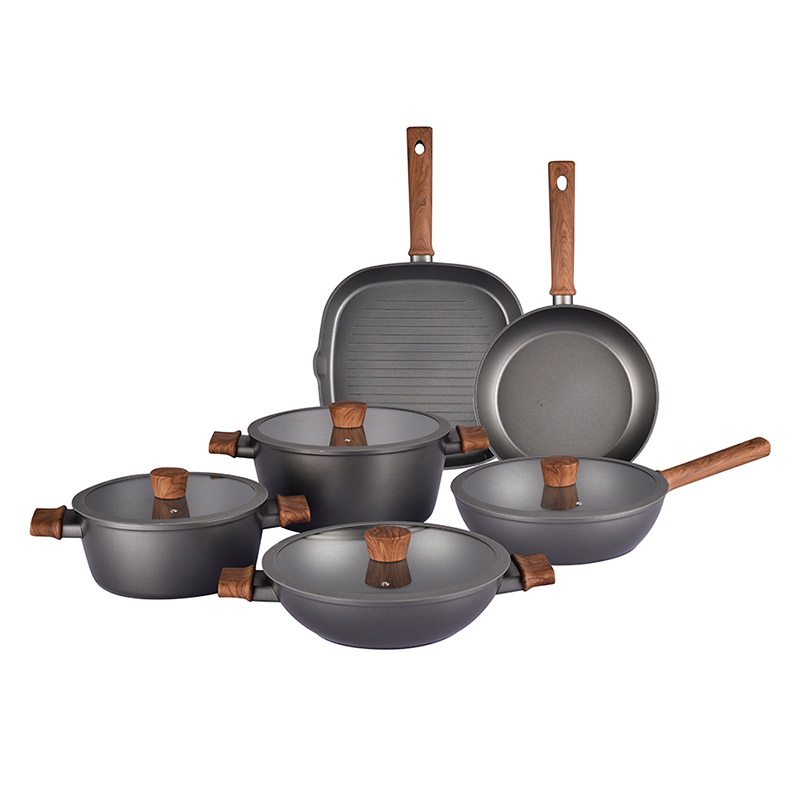
Global cookware buyers are moving from supplier qualification based on price and product samples to supplier evaluation based on visibility, traceability, quality control, and delivery reliability. A cookware manufacturer that can show where materials come from, how a non-stick coating is applied, and which batch a pan belongs to is easier to trust than one that only sends a polished sample. For OEM cookware manufacturer buyers, this shift turns cookware supply chain transparency from a nice-to-have into a practical selection criterion, and it changes what to ask a cookware manufacturer during sourcing.
From Sample Approval to Process Evidence
A sample proves that a factory can make one good pan. It does not prove that the same pan will come out of every production run. Buyers are therefore asking for process evidence: coating thickness records, curing temperature logs, and inspection results tied to a specific batch. A non-stick cookware manufacturer that keeps these records can answer questions months later, when a customer complaint arrives. One that cannot may still produce good pans, but the buyer has no way to confirm it. This is also where how to verify a cookware manufacturer becomes a practical question rather than a formal one.
What Traceability Should Cover
Cookware supplier traceability is often described in broad terms, so it helps to break it down into concrete points:
· Raw material origin, including aluminum grade and coating supplier, so a material change can be traced to affected batches;
· Production records by batch, covering casting or pressing, coating application, curing, and assembly;
· Inspection data linked to the same batch, so a test result can be matched to the pans that shipped.
When these three connect, a buyer can follow a finished pan back to its inputs. When they do not, traceability is a claim rather than a system. An aluminum cookware manufacturer that links material certificates to production lots is usually better prepared for audits and customer queries.
Quality Control That Leaves a Record
Cookware quality control covers several stages, and each stage should produce something a buyer can review. Incoming material checks confirm aluminum grade and coating specification. In-process checks catch coating defects, uneven thickness, and curing problems before assembly. Final inspection covers handle attachment, coating adhesion, and dimensional accuracy. A cookware factory China buyers rely on typically documents these checks rather than relying on visual judgment alone. Buyers can ask for a sample inspection report and see whether it lists measured values or only pass or fail marks. Strong cookware manufacturing quality control is visible in these records, and how to check cookware factory quality often comes down to whether such records exist and whether they match the shipped goods.
Delivery Reliability and Communication
Visibility also applies to scheduling. A cookware supplier that shares production milestones, such as material arrival, coating run, and packing date, gives buyers time to adjust plans. One that reports only a shipment date leaves buyers exposed to surprises. Clear communication during a delay matters as much as the delay itself; a supplier that explains the cause and offers a revised date is easier to work with than one that stays silent. This is where a global cookware sourcing strategy benefits from treating communication habits as part of the evaluation, and where OEM cookware supplier evaluation should include response speed and record keeping, not only price and samples.
How to Evaluate a Supplier in Practice
Buyers can turn these ideas into a short evaluation routine. A cookware supplier traceability checklist might include a factory audit, a review of batch records, a sample inspection report, and a conversation about how changes are handled. Asking how to evaluate a cookware supplier often comes down to whether the factory can answer specific questions without preparation. Questions such as "which coating batch was used for this order" or "what happens when a curing log shows a deviation" reveal whether systems exist or whether answers are improvised. These checks help reduce cookware sourcing risk without requiring a full audit team.
Outlook
As buyers compare more factories across regions, visibility is likely to remain a practical differentiator alongside price and product quality. Cookware manufacturing process control and documented quality checks give buyers a basis for long-term partnerships, while vague claims become easier to spot. The suppliers that invest in records and clear communication are the ones best placed to answer the questions buyers are now asking.