


 Español
 عربى
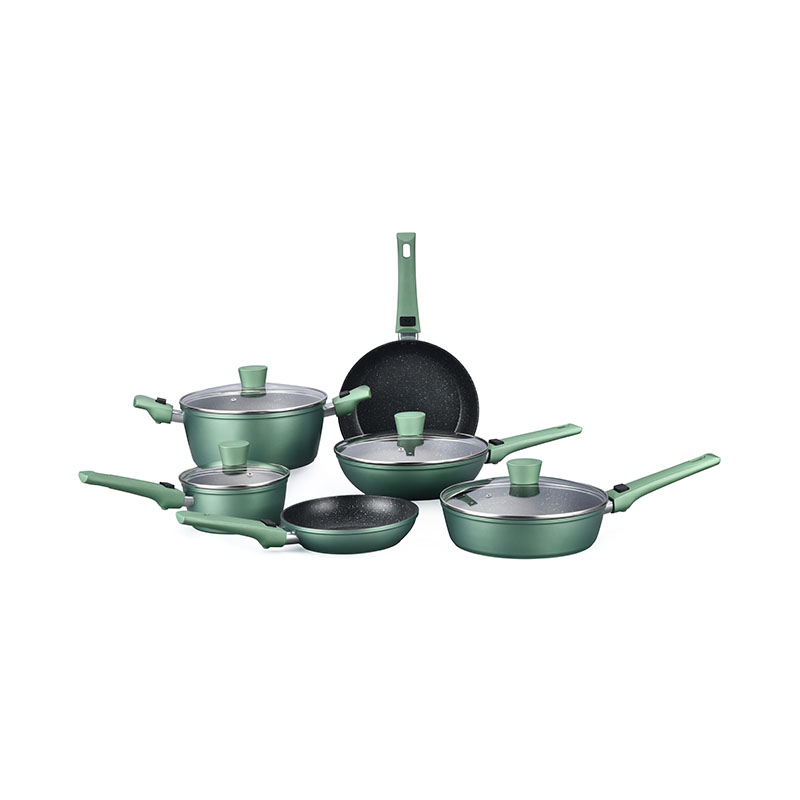
The cookware industry has spent twenty years selling coatings. Multi-layer non-stick. Ceramic. Diamond-reinforced. PTFE-free. Every brand has a coating story. What the industry has not spent twenty years doing is proving that the coating still works after two hundred uses.
That is not unusual. Cookware coating technology has advanced a lot in ten years. The testing has not kept up. Buyers still ask what coating is on the pan. They should be asking what happened to the pan after two hundred cycles.
The Coating Is the Easy Part
Applying a coating is a machine doing what it was set to do. The hard part is proving the coating will still be there in year two. Non-stick coating testing covers abrasion, release after repeated use, adhesion, and heat resistance. Most factories run some version of this on a sample. Very few run it on the production batch.
That is the gap. Non-stick cookware quality is not decided by the coating brand. It is decided by whether the factory treats the test as a routine or as a photo opportunity for the catalog.
Standards Are Local. The Logic Is Not.
Cookware manufacturing standards differ from market to market. But the logic is the same everywhere: test the finished pan, not a lab coupon. Test it the way the customer will use it. Metal spatula. High heat. Dishwasher. The hundredth egg.
An aluminum cookware manufacturer that documents the protocol and the results hands the buyer something to argue with. One that sends a sample and a brochure hands over a feeling. Those are different products.
What Changed in the Buyer's Question
Five years ago a non-stick cookware manufacturer won the order on price and coating name. Now the buyer asks for the data before the sample. Abrasion cycles. Release after repeated use. Adhesion after thermal cycling.
An OEM cookware manufacturer with an in-house lab answers in days. One without it answers in weeks, or not at all. That response time is now part of the offer.
Put the Test in the First Email
A cookware supplier that cannot produce the report will be asked for it later, usually after a complaint. Cookware sourcing that puts the testing requirement into the first inquiry filters those suppliers out before anyone ships a sample.
Cookware quality inspection is the last gate. Coating thickness on the finished pan. Adhesion. Base flatness. Handle torque. The record follows the shipment. If it does not exist, the shipment is a gamble.
Here is what to ask before the order:
- Coating thickness measured on the pan, not quoted from the can
- Abrasion data from the production coating, not the sample
- Release after repeated cycles, not the first use
- Adhesion after thermal cycling
- Base flatness after heating and cooling
- Inspection records per batch, not per shipment
The Pan That Passes
A non-stick cookware manufacturer that treats testing as part of the product ships the pan people recommend to a friend. The coating starts the conversation. The test is what makes the buyer come back.