


 Español
 عربى
عربى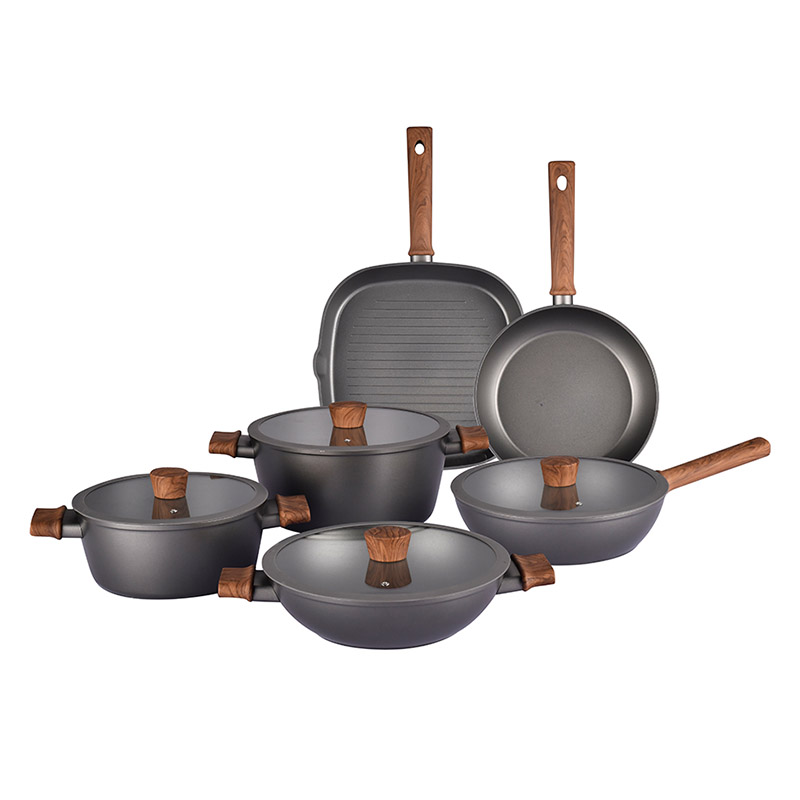
PFAS-free cookware is not just a regulatory trend. It is changing how cookware is designed, manufactured, and marketed around the world. What started as a response to health concerns has become a movement. Consumers are reading labels. Retailers are asking questions. Cookware brands that do not adapt are losing shelf space. A PFAS-free cookware manufacturer is no longer a niche supplier. It is becoming the new normal.
What PFAS-Free Actually Means
PFAS stands for per- and polyfluoroalkyl substances
These are chemicals used to make non-stick coatings. They repel water and oil. They make food slide off the pan. But they do not break down in the environment. They persist in water and soil. They accumulate in the body. A PFAS-free cookware manufacturer does not use these chemicals.
PFAS-free does not mean non-stick-free
Many people assume PFAS-free means pans will stick. That is not true. Ceramic coatings work without PFAS. Seasoned cast iron works without PFAS. Some stainless steel pans have textured surfaces that reduce sticking. A PFAS-free cookware manufacturer uses alternative technologies.
Why the Shift Is Happening Now
Regulations are tightening around the world
Europe is leading the ban. The US is following. Several states have already restricted PFAS in cookware. A PFAS-free cookware manufacturer is ahead of the regulations. They are not scrambling to comply. They already comply.
Consumer awareness is growing
People read labels now. They search for "PFAS-free" before buying. A PFAS-free cookware manufacturer puts it on the box. It becomes a selling point. Brands that still use PFAS are losing customers.
Retailers are demanding PFAS-free products
Large retailers are phasing out PFAS cookware. They do not want the liability. A PFAS-free cookware manufacturer has access to more retail channels. The ones that do not comply lose shelf space.
Here is what the shift looks like:
- l Consumer demand — shoppers are looking for PFAS-free labels
- l Retailer pressure — stores are removing PFAS products from shelves
- l Brand reputation — PFAS-free is a positive marketing message
How a PFAS-Free Cookware Manufacturer Operates
Alternative coatings are the new standard
Ceramic coatings are the common alternative. They are made from silicon dioxide. They are non-stick. They are PFAS-free. A PFAS-free cookware manufacturer uses ceramic coatings on aluminum and stainless steel.
Some manufacturers use sol-gel technology. The coating bonds to the metal at a molecular level. The pan is durable. The non-stick lasts. The coating is PFAS-free.
Material selection matters
The base material is still aluminum or stainless steel. The coating is what changes. A PFAS-free cookware manufacturer selects coatings that perform without PFAS. The coating must be durable. It must not chip. It must release food easily.
Testing is more rigorous
PFAS-free coatings are newer. They need more testing. A PFAS-free cookware manufacturer tests for adhesion, durability, and heat resistance. The pan must perform like a traditional non-stick pan.
Here is what testing includes:
- l Adhesion test — the coating stays on the pan
- l Abrasion test — the coating resists scratching
- l Heat test — the coating does not degrade at high temperatures
- l Release test — food releases easily
What PFAS-Free Cookware Means for Buyers
The price may be slightly higher
PFAS-free coatings are newer. Manufacturing processes are still being optimized. A PFAS-free cookware manufacturer may charge a bit more. The price difference is shrinking as volume increases.
The performance is comparable
A good PFAS-free pan performs like a traditional non-stick pan. Food releases. Cleaning is easy. The pan does not stick. A PFAS-free cookware manufacturer has solved the performance issues.
The sustainability story is stronger
PFAS-free pans are better for the environment. They do not release persistent chemicals. A PFAS-free cookware manufacturer can market the sustainability angle. It resonates with consumers.
What to Watch Out For
Greenwashing is real
Some brands claim PFAS-free but use other harmful chemicals. A PFAS-free cookware manufacturer should provide third-party testing. The testing should confirm the coating is free of PFAS and other harmful substances.
Durability varies
Some PFAS-free coatings are less durable than traditional non-stick. A PFAS-free cookware manufacturer should offer a warranty. The warranty should cover peeling and chipping.
Not all PFAS-free coatings are equal
Ceramic coatings vary. Some are better than others. A PFAS-free cookware manufacturer should use high-quality coatings. The coating should last for years.
PFAS-free cookware is not a trend. It is the direction the industry is moving. Regulations are making it mandatory. Consumers are demanding it. Retailers are requiring it. A PFAS-free cookware manufacturer is positioned for the future. They are not fighting the change. They are pilot it. For buyers, PFAS-free cookware is a safe choice. It performs well. It is better for the environment. It is better for health. That is the future of cookware.