

 Español
 عربى
عربىEurope and the U.S. are now enforcing PFAS rules that directly affect how nonstick cookware is made and sold. 2026 is the year these regulations actually bite, not just sit on paper. Below is a look at where things stand: European rules, U.S. state laws, coating changes, and why ceramic has become the go-to option for compliant nonstick cookware.
Europe: Full Enforcement in 2026
Europe has the strictest PFAS rules right now. The EU's REACH framework fully enforces its universal PFAS restriction in 2026. That means any nonstick cookware with PTFE or other PFAS-based coatings is effectively banned.
What this means in practice:
- l If your nonstick cookware has detectable PFAS, it cannot enter the EU.
- l Importers now ask for PFAS-free lab reports on every shipment.
- l Non-compliance gets you recalls and fines.
- Because of this, most European buyers have stopped ordering traditional PTFE-based nonstick cookware. Suppliers exporting to Germany, France, or the Nordic countries need clear PFAS-free documentation. No exceptions.
United States: State Laws Are Driving Everything
The U.S. still has no single federal PFAS ban in 2026. But state laws are already changing the market. California, New York, Maine, Minnesota, and Colorado have all passed restrictions on PFAS in nonstick cookware.
A few things suppliers need to know:
- l California's AB 1200 requires disclosure and restricts “no PFAS” claims.
- l Maine and Minnesota have completely phased out PFAS in cookware as of 2026.
- l Big retailers like Walmart, Target, and Costco now require PFAS-free nonstick cookware from their vendors.
Relying on federal standards is no longer enough. The safer route is to make nonstick cookware that is completely PFAS-free for all U.S. orders.
Coating Changes: PTFE Is on the Way Out
Traditional PTFE coatings are disappearing from compliant nonstick cookware. Many manufacturers have already stopped offering PTFE lines for regulated markets.
What replaces it in 2026? Three main options:
l Ceramic coatings
l Sol-gel coatings
l Diamond or titanium-reinforced coatings
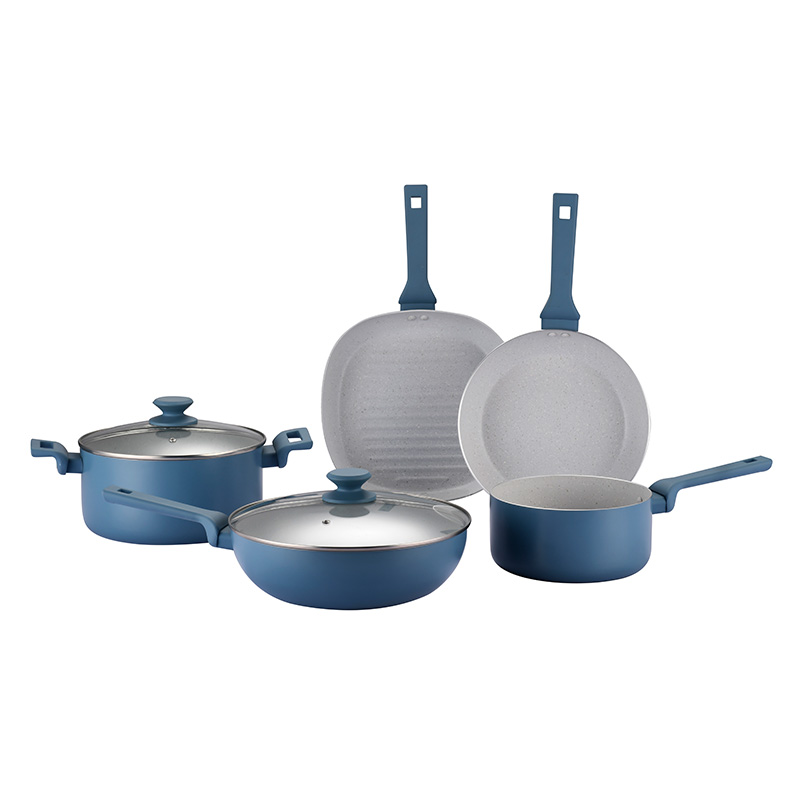
Ceramic is the most common. For nonstick cookware going to Europe or the U.S., a ceramic nonstick layer is now the default. No PFAS, no PFOA, no PTFE. That said, ceramic does not last as long as PTFE if the application is not done right. In 2026, better manufacturers are using multi-layer ceramic or hybrid formulas to close that gap.
Ceramic Coating Trend: The New Standard
Ceramic coatings are no longer a niche product. In 2026, over 60% of new nonstick cookware sold in Europe and the U.S. uses ceramic-based nonstick layers.
Why the shift happened:
- l No future PFAS ban will affect ceramic coatings.
- l “PFAS-free” and “eco-friendly” labels actually help sales.
- l Ceramic-coated nonstick cookware has no chemical-related shipping restrictions.
From a production standpoint, switching to ceramic means different spraying and curing processes. Oven temperatures and layer thickness need tighter control than PTFE. On the cost side, ceramic raw materials are often cheaper than imported PTFE dispersions, which helps offset production adjustments.
What Suppliers Should Do in 2026
If your company makes nonstick cookware for export, here is a straightforward checklist:
1. Test everything for PFAS, including trace contamination from equipment.
2. Switch to ceramic or sol-gel for all EU and U.S.-bound orders.
3. Update labels – use “PFAS-free” and “Ceramic nonstick,” not vague claims.
4. Get third-party certifications like LFGB (Germany) or FDA (U.S.).
5. Make sure your sales team can answer PFAS questions with actual test reports, not just talking points.
PFAS rules in 2026 are already changing orders, materials, and market access. For nonstick cookware, the PTFE era is ending in Europe and the U.S. Ceramic coatings are not perfect, but they are the most practical option right now. Suppliers who switch to PFAS-free nonstick cookware will keep their customers in regulated markets. Those who wait will lose business.