

 Español
 عربى
عربىSourcing cookware from China can be a smart move for your bottom line. But it also carries risks that catch many buyers off guard. A wrong decision early on can mean failed inspections, unhappy customers, or weeks of delayed shipments. The good news is that most of these problems are preventable if you know what to watch for.
Below are five common mistakes buyers make when working with a cookware manufacturer in China, and how to steer clear of them.
Going with the Lowest Price
Everyone likes a good deal. But when a cookware manufacturer offers prices that are significantly below the market average, something usually gets sacrificed. It might be the grade of aluminum. It could be the thickness of the base. Or the nonstick coating might be the cheapest available, which can lead to peeling or failing food safety tests.
A buyer from Europe once shared that they chose a supplier based solely on price. The pans looked fine in photos. But when the shipment arrived, the coating scratched easily and the handles felt loose. They ended up reordering from another cookware manufacturer and lost two months of sales.
What to do instead: Ask for a detailed breakdown of the quote. Compare material specs and coating types across at least three suppliers. If one price stands out as too low, ask that cookware manufacturer to explain the difference. A serious supplier will give you a clear answer.
Not Clearing Up MOQ Early
MOQ stands for minimum order quantity. Some buyers avoid discussing it because they hope the number will be low. Others simply forget to ask. Then, after weeks of back-and-forth on samples and designs, they find out the factory requires 8,000 or 10,000 pieces per SKU. For a brand testing a new product line, that is often a deal breaker.
This is an easy problem to avoid. On your first call or email with a cookware manufacturer, ask for their MOQ per SKU. Get separate numbers for standard molds and custom designs. If you are a smaller brand or a first-time importer, look for a manufacturer that offers a trial run – say 500 to 1,000 units per item. Some factories are flexible, but you have to ask.
Sample and Mass Production Don't Match
This is one of the most frustrating issues in sourcing. You receive a sample from your cookware manufacturer. Everything looks good. The coating is smooth. The handle feels solid. You approve it and place a full order. But when the container arrives, the products look different. The coating seems thinner. The color is slightly off. The packaging does not feel the same.
Why does this happen? Some factories put extra care into samples but cut corners during mass production. Others use different production lines for samples and bulk orders.
The fix: Do not rely on a single sample. Ask your cookware manufacturer to run pre-production samples from the actual mass production line. Once those are approved, request a small batch – around 20% to 30% of the total order – before committing to the full quantity. A trustworthy cookware manufacturer will agree to this without pushback.
Overlooking Coating Quality
Many buyers focus on the pan body and handle, but the coating is what makes or breaks nonstick cookware. A low-quality coating can peel after a few weeks of use. It may contain chemicals that do not meet LFGB, FDA, or RoHS standards. That leads to customer complaints, returns, and in some cases, legal trouble.
Some buyers assume that all coatings are similar. They are not. Different formulations have different durability, heat resistance, and safety profiles. A responsible cookware manufacturer will provide coating certification documents and third-party test reports upon request. If a supplier hesitates or gives vague answers, consider that a red flag.
Before placing an order, confirm which certifications the coating carries. For export to Europe, LFGB is common. For the US, FDA compliance is essential. SGS and RoHS are also widely required. If you need additional certifications for a specific country, ask upfront whether the cookware manufacturer can support them.
Dealing with Delivery Delays
Late shipments cause a chain reaction of problems. Your warehouse runs out of stock. Retail partners get frustrated. Customers wait longer than promised. Delivery delays often happen because the cookware manufacturer did not plan raw material purchases properly, or because production capacity was overbooked with other buyers.
In some cases, the factory simply does not communicate. You send an email asking for an update and hear nothing back for a week. By the time you find out about the delay, it is too late to adjust.
How to prevent this: Before signing a contract, ask your cookware manufacturer for a clear production timeline. The schedule should include raw material ordering, mold making (if applicable), sample approval, mass production, quality inspection, and loading date. Put penalty clauses for late delivery in the purchase agreement. Also, maintain regular contact during production. A brief weekly update can help you catch potential delays early and make adjustments.
A Cookware Manufacturer That Takes These Risks Seriously
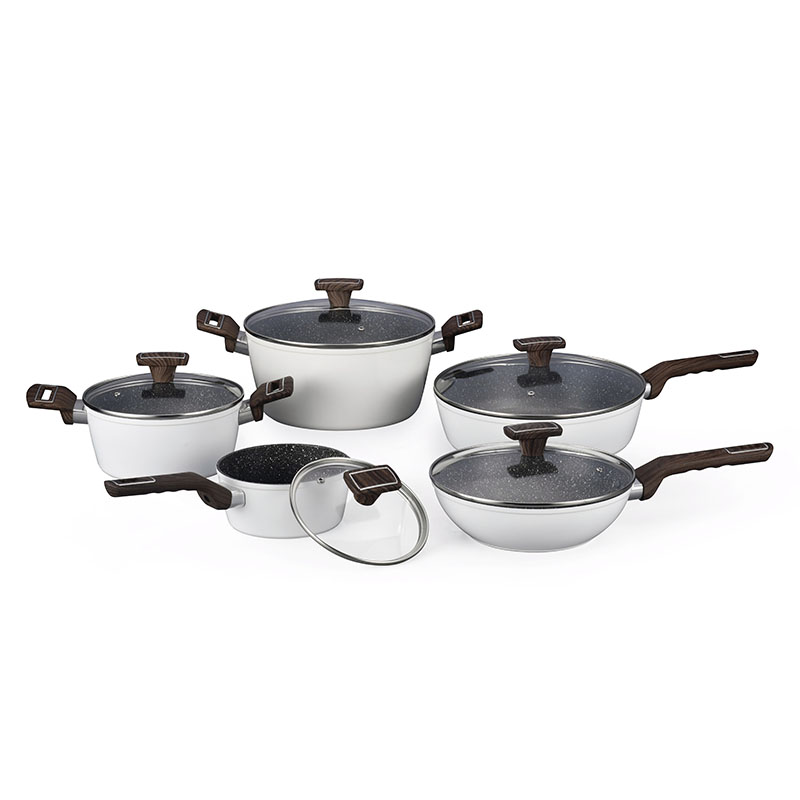
These five risks are real, but they are all avoidable with the right partner. Zhejiang Changyuan Technology Co., Ltd. (brand TELAMON) has been a trusted cookware manufacturer since 2009, specializing in aluminum nonstick products including frying pans, woks, saucepans, and more.
Changyuan exports to markets across the globe and offers OEM services for custom orders. All products use coatings that comply with LFGB, FDA, SGS, and RoHS standards, with additional certifications available upon request.
If you are looking for a cookware manufacturer that understands your risks and provides real solutions, visiting Changyuan's factory is a practical next step. Avoid the common mistakes – start with the right partner.