


 Español
 عربى
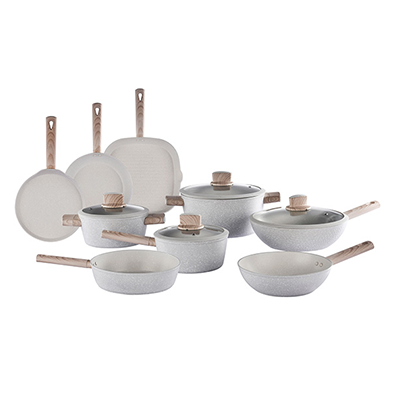
A factory quote tells you what the cookware costs before it leaves the dock. It doesn't tell you what the shipment costs when it clears customs. In 2026 those two numbers can be far apart. Duties, anti-dumping margins, and stacked tariffs depend on the country printed on the customs entry. And that country isn't always where the value was actually added.
The Tariff Stack Is Not One Number
Base tariffs are the first layer. Section 301 duties sit on top. Anti-dumping and countervailing duties come after that. Safeguard measures may apply as well. For a cookware manufacturer shipping aluminum non-stick pans, the combined rate can exceed 50% depending on origin and product classification. None of it shows up on the factory quote.
Anti-dumping margins are product-specific. A non-stick cookware manufacturer in China may face a different margin than a supplier in Vietnam or Thailand. The margin applies to the exporter, not the brand. Private label cookware buyers who don't know the exporter of record are carrying risk they can't see.
That's why a 10% lower factory quote can be meaningless. If the tariff difference is 15%, the cheaper quote isn't cheaper.
"China+1" Only Works When Value Is Documented
Moving final assembly to Vietnam doesn't automatically change the origin. Rules of origin look at where substantial transformation happened. If the non-stick coating, the aluminum disc, and the handle are all made in China and only the assembly happens elsewhere, the origin may still be China.
A cookware supplier that can document where each component was made and where the value was added is in a stronger position than one that only relabels the carton. Component-level traceability is the new requirement. A cookware factory China operation that supplies coated aluminum discs to a Vietnam assembly plant creates a traceability question.
Customs authorities want evidence of substantial transformation. Production records, cost breakdowns, process documentation. A cookware manufacturer that can't provide this evidence can't support a changed origin claim.
What Buyers Need to Verify Before Placing Orders
The exporter of record has to be identified. The anti-dumping margin applies to the exporter, not the brand. Private label cookware buyers should confirm the exporter before the order goes out.
The bill of materials has to show component origin. A cookware manufacturer should identify where the aluminum, the coating, the handle, and the packaging came from. Cookware sourcing decisions based on final assembly location alone are incomplete.
The cost breakdown has to show value added by stage. A cookware supplier should provide a breakdown showing the value added at each production stage. That's what customs authorities look for.
The tariff classification has to be confirmed. Non-stick cookware can fall under different tariff codes depending on material and construction. A non-stick cookware manufacturer should confirm the classification with the buyer. Wrong code, wrong duty rate.
Common verification requests for cookware sourcing:
- Exporter of record identification
- Bill of materials with component origin
- Cost breakdown by production stage
- Tariff classification confirmation
- Production records for substantial transformation
- Supplier list by component
- Country-of-origin declaration per shipment
Why This Changes OEM and Private Label Sourcing
An OEM cookware manufacturer that only provides a country-of-origin certificate isn't enough. Buyers need component-level documentation.
Private label cookware brands are often the importer of record. If the origin claim gets challenged, the brand pays the duty and the penalties. A cookware supplier that supports origin verification reduces that risk.
Buyers who don't understand rules of origin, anti-dumping margins, and tariff stacking are at a disadvantage. Cookware sourcing in 2026 means reading the customs entry, not just the factory quote.
Buyers Focus on Documentation, Traceability, and Landed Cost
A cookware manufacturer that can't provide production records and cost breakdowns can't support a changed origin claim.
From the aluminum disc to the coating to the handle, traceability has to cover every component. A cookware supplier that can't trace components can't verify origin.
Cookware sourcing comparisons that use factory quotes alone are incomplete. The landed cost calculation has to include base duties, anti-dumping margins, and stacked tariffs. A cookware supplier that helps buyers calculate landed cost is more valuable than one that only quotes FOB.