


 Español
 عربى
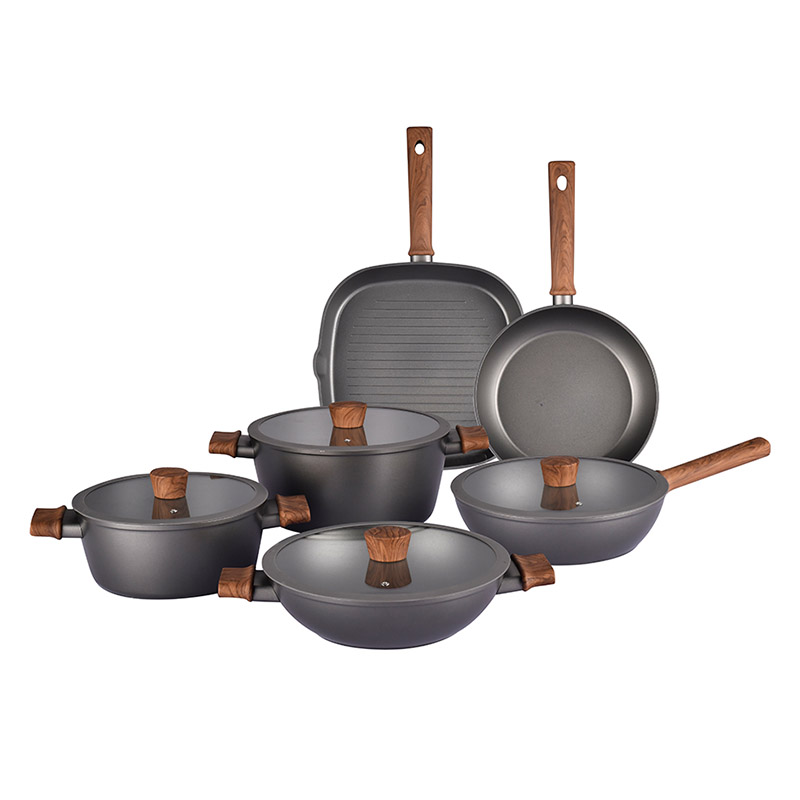
EU restrictions on PFAS in food-contact packaging are now in force, and they change what cookware compliance means. The rule no longer stops at the pan. It covers the paper, film, ink, adhesive, and coating that touch the cookware before it reaches the shelf. A PFAS-free pan packed in non-compliant packaging is no longer a compliant product. Cookware sourcing has become a compliance exercise that runs from the coating line to the shipping carton.
The Rule Change Moves Packaging into Scope
PFAS restrictions now cover food-contact packaging
The EU has been tightening PFAS rules for years. The latest changes extend restrictions to food-contact packaging. Paper, film, coating, and ink that touch the cookware during shipping are now part of the compliance picture. A cookware manufacturer that sourced PFAS-free coatings but packed pans in coated paper may now have a problem.
Packaging materials are often overlooked in supplier audits
Most cookware sourcing audits focus on the factory floor. Coating lines, curing ovens, material certificates. Packaging gets treated as an afterthought. A cookware supplier with perfect coating documentation may have nothing for its packaging. The gap only shows up when a buyer asks.
The EU PPWR adds packaging sustainability requirements
The EU PPWR packaging regulation adds another layer. Recyclability, recycled content, and reduction targets now apply alongside PFAS restrictions. A cookware supplier that meets PFAS rules but uses non-recyclable packaging may still fall short.
Common documentation requests for EU cookware compliance:
- l Coating formulation and PFAS declaration
- l Migration test reports
- Third-party certification for PFAS-free claims
- Packaging material safety data sheets
- Packaging PFAS declarations
- Recyclability and recycled content data
- Packaging supplier list and traceability
- Ink and adhesive composition declarations
What Buyers Need to Request from Suppliers
Coating documentation must cover the full formulation
A PFAS-free claim is not enough. Buyers should request the full coating formulation, migration test reports, and third-party certification. A non-stick cookware manufacturer that can provide this documentation has done the work. One that cannot is a risk.
Packaging material declarations must be requested separately
Food contact packaging compliance is a separate request. Buyers should ask for material safety data sheets, PFAS declarations, and recyclability information for every packaging component. This includes the paper, the film, the ink, the adhesive, and any coatings.
Supplier traceability must extend to packaging sources
A cookware manufacturer may source packaging from multiple suppliers. Traceability has to cover the entire chain. Buyers should ask for a list of packaging suppliers and the compliance documentation for each.
Why This Changes OEM and Private Label Sourcing
OEM cookware manufacturers must manage packaging compliance
An OEM cookware manufacturer builds to the buyer's specification. If the specification does not include packaging compliance, the manufacturer may default to the cheapest packaging option. Buyers now need to write packaging compliance into the specification.
Private label cookware brands carry the compliance risk
Private label cookware brands put their name on the product. If the packaging violates EU rules, the brand is liable. A cookware supplier that handles food contact packaging compliance end to end is worth more than one that only handles the pan.
Cookware sourcing now requires a systems approach
Buyers who treat coating, packaging, and traceability as separate items will miss something. The compliance system has to be evaluated as a whole. A cookware supplier that understands this is better positioned than one that sells pans and leaves packaging to the buyer.
Buyers Focus on Documentation, Traceability, and System Integration
Documentation must be complete and current
Coating and packaging documentation has to be up to date. A cookware manufacturer that provides outdated certificates is a liability.
Traceability must cover the full supply chain
From coating raw materials to packaging suppliers, traceability has to be complete. A cookware supplier that cannot trace its packaging sources is a risk.
System integration separates good suppliers from average ones
The best cookware suppliers treat compliance as a system. They provide documentation for the pan and the packaging together. PFAS-free cookware in non-compliant packaging is not compliant.
EU cookware compliance now means the pan, the coating, the packaging, and the traceability are one system. PFAS cookware compliance is a supply chain requirement.