


 Español
 عربى
عربى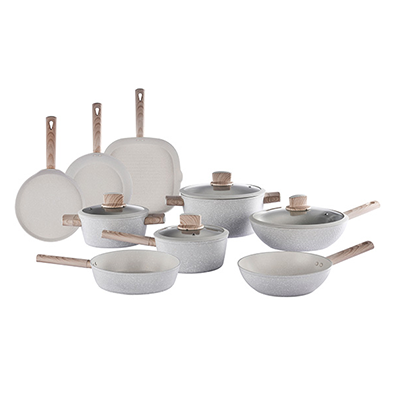
The non-stick pan is not dead. It just looks different now.
Walk down a kitchenware aisle in Bogotá or Mexico City and look at what is actually on the shelves. The same non-stick frying pans are there, but next to them sits something new. Cream-colored pans with matte finishes. Stone-look surfaces in soft grays and muted reds. Boxes printed with words like "sin PTFE" and "recubrimiento cerámico."
Ceramic coated cookware has arrived in the Latin America cookware market. Not as a niche product for health food stores. As a full category that is stealing shelf space from traditional non-stick.
The Consumer Changed First
Five years ago, a customer bought a pan based on price and brand. Today, that same customer flips the pan over and reads the label.
What are they looking for? The word "ceramic." The phrase "free of PTFE." Something that sounds less like a chemistry experiment and more like sand and stone baked hard.
Ceramic cookware sells a simple story. Natural materials. No synthetic chemicals. Clean. Whether that story is entirely accurate or not, the consumer believes it. And in a market where people are increasingly worried about what touches their food, belief drives the purchase.
The look matters too. A ceramic coated cookware set has a softness that traditional black non-stick does not. It photographs better. It looks better on an open shelf or hanging from a pot rack. For the Instagram generation buying their first apartment kitchen, that aesthetic is part of the decision.
What the Pan Actually Does
Here is the part that does not show up in the marketing photos.
Ceramic releases food beautifully when it is new. An egg slides across the surface on day one like it is on glass. For low and medium heat, an omelet, sautéed vegetables, a quick sauce, ceramic performs just as well as PTFE.
But ceramic does not last as long. The surface is harder, yes, more scratch-resistant. But the release property fades faster. Month six. Month eight. The egg starts to stick. The user adds more oil. By the end of the first year, the pan that once slid eggs now needs butter like an old steel skillet.
Latin American cooking pushes this faster. High heat for searing. Long-simmered sauces. The sofrito that bubbles for an hour. Ceramic cannot take that abuse the way PTFE can. It degrades faster under heat. Cookware trends 2026 are already reflecting this reality in product positioning.
A smart non-stick cookware manufacturer is honest about this. Ceramic is for low and medium heat. PTFE is for the workhorse pan. The buyer who hides this truth gets returns. The buyer who sells ceramic for what it is keeps the customer.
Two Pans, Two Customers
The Latin America cookware market is not choosing one coating over the other. It is splitting into segments.
Traditional non-stick still dominates by volume. It is cheaper. It lasts longer. It handles abuse. The customer who wants one pan that does everything, searing, simmering, daily eggs, buys PTFE. A non-stick cookware manufacturer serving this segment focuses on coating thickness and base durability.
Ceramic carved out its own buyer. The health-conscious cook. The young couple buying their first kitchen. The gift buyer who wants a set that looks premium in the box. Ceramic cookware Latin America is strongest in the mid-range and premium tiers, where people will pay more and accept a shorter lifespan because the pan feels cleaner.
That split creates space for both. A cookware sourcing strategy built only on PTFE misses the trend. One built only on ceramic ignores the volume. The buyer who carries both, positioning ceramic as the premium line and PTFE as the daily workhorse, covers the spread.
Sourcing Ceramic Is Different
Ceramic coated cookware comes with different questions than PTFE.
A generic ceramic over poorly prepped aluminum fails faster than cheap PTFE. An OEM cookware manufacturer with real ceramic experience knows which coatings hold up.
What is the heat ceiling? Ceramic has limits. The buyer needs to know what they are and whether they match how the target customer cooks. Selling ceramic to a market that sears at high heat is setting up returns.
How honest can you be about lifespan? Ceramic will not last as long as PTFE. The buyer who says this upfront keeps the reorder. The buyer who hides it loses the customer on the second purchase.
Here is the checklist for a non-stick cookware manufacturer supplying ceramic coated cookware:
- Coating source with a track record in ceramic formulations
- Aluminum gauge underneath that supports the coating
- Heat limits clearly stated and matched to real cooking habits
- Scratch resistance data from standardized tests
- Color consistency across production batches
The Shelf in 2026
Non-stick cookware trends do not point to a winner. They point to a split shelf.
The consumer who grew up with one non-stick pan now owns two. A black PTFE pan for the hard work. A ceramic pan for the gentle cooking, the health-conscious meals, the dishes they photograph before they eat.
The buyer who understands this split sources both. The non-stick cookware manufacturer that produces both, with clear guidance on what each does well, earns the trust. Ceramic is not replacing PTFE. It is taking the premium end of the market while PTFE holds the volume.
The Latin American consumer has already made the choice. They are buying ceramic. The buyer who moves now, sourcing ceramic where it fits and PTFE where it works, keeps the shelf and the customer. That is what the rise of ceramic actually means. It is not the end of non-stick. It is the beginning of a market that finally understands what each coating is for.