


 Español
 عربى
عربى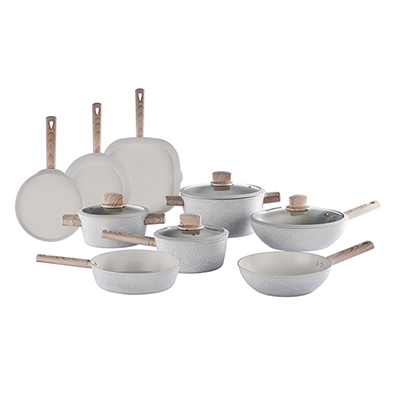
Two years ago, the EU's universal PFAS restriction was a distant regulatory threat. In 2026, it is a wall — and EU importers are the first to hit it. In March 2026, ECHA's Committee for Risk Assessment (RAC) issued its final opinion supporting an EU-wide, class-based restriction on per- and polyfluoroalkyl substances. Days later, the Committee for Socio-Economic Analysis (SEAC) published a draft opinion endorsing the same direction while building in a derogation framework, opening public consultation until May 25, 2026. For importers placing cookware, food packaging, textiles, electronics, or industrial components on the EU market, the message is unambiguous: unmanaged fluorochemistry is ending, and the transition window is measured in months, not years.
Why 2026 Changed the Game
The restriction proposal — originally submitted in January 2023 by Denmark, Germany, the Netherlands, Norway, and Sweden — covers more than 10,000 PFAS substances and has now passed the decisive scientific hurdle. RAC concluded that PFAS pose unacceptable risks to human health and the environment due to persistence, mobility, and bioaccumulation potential, and that a comprehensive EU-wide restriction is the most appropriate risk-management measure, projecting a roughly 96% reduction in PFAS emissions over 30 years.
SEAC did not fully endorse an immediate ban. Its draft opinion argues that an outright prohibition would be disproportionate given current technical and economic constraints, favoring instead a general prohibition combined with time-limited, use-specific derogations. That dual-opinion alignment is the regulatory architecture importers must now plan around: the restriction is coming, and derogations — not exemptions — are the only escape hatch.
The Structural Test That Decides Everything
Compliance no longer starts with a substance name. The proposal defines PFAS structurally: any substance containing at least one fully fluorinated methyl (CF₃) or methylene (CF₂) carbon atom, with no hydrogen, chlorine, bromine, or iodine attached. Three practical consequences follow for importers:
Check the molecule, not the label.
- A product is in scope regardless of its commercial name, trade designation, or whether the substance appears on any SVHC list today.
No "regrettable substitution."
- Switching to a structurally similar PFAS is not a compliance strategy — the class-based definition closes that loophole by design.
Articles count.
- The restriction covers manufacture, use, and placing on the market of PFAS in substances, mixtures, and finished articles. Under REACH, "placing on the market" occurs for importers at customs release for free circulation — meaning the importer of record carries primary responsibility for every fluorinated component in a finished good.
Where Importers Are Most Exposed
The highest-risk categories are non-stick cookware coatings, water- and grease-repellent textile finishes, food-contact paper and board, sealing materials, gaskets and membranes in industrial equipment, and fluoropolymer components in electronics. Importers with multi-tier Asian supply chains face the steepest climb, because the obligation attaches at the article level: a single component containing PFAS can block an entire SKU.
The Derogation Door — Narrow, but Open
SEAC's framework allows derogations where no technically and economically feasible alternative exists, typically time-limited with mandatory emissions-minimization conditions. To qualify, importers must document the absence of alternatives with evidence that will be scrutinized against the evolving Annex XVII amendment. The practical takeaway: build your alternative-assessment dossier now, because the SEAC consultation window (closed May 25, 2026) shaped the final text, and the final restriction will grandfather only documented transition efforts.
The Ceramic Coating Pivot
For cookware, bakeware, and food-contact surfaces — the products most visible to consumers — the market has already moved. Maine's ban on PFAS in specific food packaging took effect May 25, 2026, and US and EU retailers are de-listing PTFE-based nonstick lines ahead of the EU rule. High-performance ceramic coatings are the leading substitute: sol-gel and silicone-based ceramic formulations now deliver release performance, thermal stability to roughly 450°C, and scratch resistance that close the gap with legacy fluoropolymer coatings. Major brands such as GreenPan (with NSF-certified Thermolon) have built entire PFAS-free product architectures, and OEM suppliers across Guangdong, Zhejiang, and Vietnam have retooled coating lines for ceramic application.
The shift is not without trade-offs. Ceramic coatings can be more sensitive to thermal shock and metal utensils, requiring updated quality-control parameters and consumer-care documentation. Importers who validate ceramic-coated lines early — testing adhesion, abrasion, and food-contact migration per EU 1935/2004 — will lock in retail programs while competitors scramble.
What Enforcement Will Look Like
EU member-state enforcement authorities are building PFAS screening capability now, and importers should expect customs-level scrutiny long before the final restriction text lands. Practical signals include targeted documentary checks on categories with historically high PFAS use, fluorine-content screening at borders, and a rising number of audit requests under REACH Article 33 for substances near the SVHC list. The transition therefore cannot wait for the regulation's official publication: a single container held at customs during peak season can destroy a season's margin, and major retailers are already embedding PFAS-free declarations into supplier sustainability questionnaires, effectively enforcing the restriction through commercial contracts ahead of the legal deadline.
The economics also favor early action. Verified PFAS-free products command premium positioning — the ceramic cookware boom demonstrates that consumers pay for the "free-from" claim. Importers who transition now also avoid the end-of-window rush that will inevitably spike ceramic coating line capacity, testing lab queues, and third-party certification costs as the deadline approaches. Waiting to be pushed is the most expensive compliance strategy available.
Building the Evidence File for Auditors
Compliance under a class-based restriction is ultimately an audit story. Importers should assemble, per SKU, a four-part evidence file: (1) the chemical inventory showing every substance and its structural classification; (2) supplier declarations and test certificates confirming PFAS-free status or documented PFAS content; (3) the alternative-assessment dossier for any derogation claim, including technical feasibility testing and cost analysis; and (4) a traceability map linking each finished article to its raw-material origin. This file should live in a version-controlled system updated at every supplier change, because the Annex XVII amendment will demand continuous compliance monitoring, not a one-time certification.
SOP: Seven-Step PFAS Compliance Transition for EU Importers
Map the portfolio.
1. Build a bill-of-materials inventory of every substance, mixture, and article imported, flagging any molecule with a fully fluorinated CF₃ or CF₂ carbon.
Run the structural test.
2. Have a qualified chemist or third-party lab classify each flagged substance against the ECHA structural definition — do not rely on SVHC lists.
Request supplier declarations.
3. Require PFAS-content declarations and test data (e.g., total fluorine screening, LC-MS/MS confirmation) from every tier-one and tier-two supplier.
Assess derogation eligibility.
4. For uses without feasible alternatives, document technical and economic infeasibility with test evidence and cost modeling.
Validate alternatives.
5. Qualify ceramic or other PFAS-free substitutes against your quality, food-contact, and performance specifications before volume orders.
Redesign compliance documentation.
6. Update technical files, DoC (Declaration of Conformity), and REACH Article 33 communications to reflect the transition.
Schedule a sunset review.
7. Track the Annex XVII amendment timeline and re-verify supplier lines quarterly until the restriction enters force.
Market Data at a Glance
|
Indicator |
Value |
Source / Note |
|
PFAS substances covered by EU proposal |
10,000+ |
ECHA universal restriction proposal (2023–2026) |
|
RAC final opinion |
March 2026 |
Supports EU-wide class restriction |
|
SEAC public consultation |
Closed May 25, 2026 |
Draft opinion: prohibition + time-limited derogations |
|
Modeled emission reduction |
~96% over 30 years |
RAC scenario analysis |
|
PFAS-free ceramic nonstick cookware market |
US6.1B (2034) |
MarketIntelo, July 2026 |
|
Maine (US) PFAS food-packaging ban in force |
May 25, 2026 |
Leading indicator for EU alignment |
|
Ceramic coating thermal stability |
~450°C |
Typical sol-gel ceramic formulation spec |
FAQ
Q1: Does the PFAS restriction affect finished consumer goods or only raw chemicals? Both. The proposal covers substances, mixtures, and articles placed on the market in the EU. A finished product containing any PFAS component — a coating, seal, or gasket — is in scope, and the importer of record carries the obligation from customs release.
Q2: Can I keep importing PTFE-coated cookware during the transition? Yes, until the Annex XVII amendment enters into force and any applicable transition period lapses. However, retailers are de-listing fluoropolymer lines ahead of the rule, so demand-side risk may arrive before the legal deadline.
Q3: What is "regrettable substitution," and why does it matter? Replacing one restricted PFAS with a structurally similar, unrestricted PFAS. The class-based CF₃/CF₂ definition blocks this, so importers must move to genuinely PFAS-free alternatives such as ceramic coatings.
Q4: Are ceramic coatings a drop-in replacement? Technically close but not identical. Ceramic lines require adjusted cookware care, thermal-shock testing, and updated food-contact documentation. Validation against EU 1935/2004 before volume orders is essential.
Q5: What happens if I do nothing? You face customs holds, product recalls, retailer delisting, and enforcement exposure once the restriction is in force — plus the reputational cost of being named as the importer of non-compliant articles.
Key Takeaways
- The EU PFAS restriction is no longer hypothetical: RAC's final opinion and SEAC's draft opinion (March 2026) lock in the direction.
- The structural CF₃/CF₂ definition means importers must audit molecules, not labels — and article-level obligations start at customs release.
- Derogations are time-limited and evidence-based; document alternatives now.
- High-performance ceramic coatings are the dominant substitute and the market has already priced in the pivot (US
- 6.1B by 2034).
- Run the seven-step SOP this quarter to protect shelf access ahead of the final Annex XVII text.