


 Español
 عربى
عربى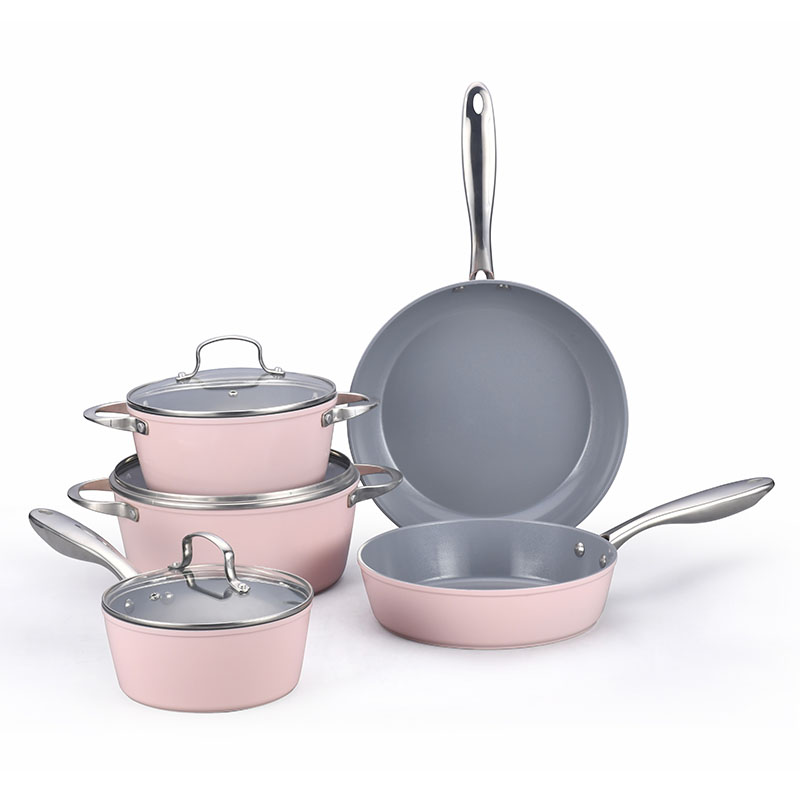
Introduction
For thirty years, PTFE-based non-stick was the default answer to a simple question: how do you make a pan that eggs slide off? That answer is now under regulatory review on both sides of the Atlantic. The EU's universal PFAS restriction proposal, submitted under REACH in 2023, is moving through its final evaluation stages, while US states from Maine to Minnesota have legislated phase-out dates for PFAS in consumer products.
For importers, the question is no longer whether the transition happens, but when, in what order, and at what cost. Buyers who sequence this transition deliberately — instead of reacting to a ban — will hold the shelf during the shakeout. This roadmap lays out the timeline, the technology options, and the testing regime that makes the switch defensible.
Section 1: Market Signal
What the regulatory and market landscape looks like entering 2027.
EU REACH universal restriction.
- The proposal by five national authorities covers all PFAS manufacture and use, including non-stick coatings. ECHA's scientific committees have delivered opinions; a European Commission decision is expected in the 2026–2027 window, with sector-specific transition periods — cookware is widely discussed as landing around 2030.
US state action is the leading edge.
- Maine's LD 1503 bans PFAS in products from 2030 (waivers available), Minnesota from 2032, and more states are legislating along the same curve. California continues through Prop 65 and product-focused measures.
FDA has closed the door on new PFAS.
- No new per- and polyfluoroalkyl food-contact substances are being approved, and existing grease-proofing authorizations were withdrawn in phases ending 2024–2026.
Retailers are pre-empting regulation.
- Major EU and US chains now request PFAS-free declarations and third-party coating test reports at onboarding — before any ban bites.
Ceramic has gone mainstream.
- Sol-gel ceramic (silicon-based) coatings have moved from premium niche to standard offering, with mature supply chains and credible performance data.
Section 2: Driving Factors
Why the transition is accelerating now.
Factor 1 — Regulatory certainty is forming. Even where final dates are pending, the direction is fixed. Buyers planning 2027–2028 product cycles must assume PFAS-free or face redesign during a phase-out window.
Factor 2 — Chemistry has caught up. Modern ceramic systems deliver genuine non-stick release with oil or butter, handle dry heat to roughly 250–300°C, and pass the migration and sensory tests that LFGB and FDA regimes require.
Factor 3 — Consumer perception. PFAS content is now a marketing liability in premium and mid-market segments. "PFAS-free" is a selling point; "PTFE" is increasingly a question.
Factor 4 — Testing infrastructure. Accredited labs now offer PFAS screening (total fluorine, targeted LC-MS/MS) at practical cost, so claims can be verified rather than trusted.
Section 3: Impact on Buyers
What the transition means commercially.
Price the performance trade-off.
- Ceramic release degrades faster than premium PTFE under heavy use and metal utensils. Set the right expectation in marketing, and match warranty language to reality.
- Re-test everything.
- New coating chemistry means new migration tests, new FDA CFR mapping, and new LFGB sensory runs. Budget 6–10 weeks per SKU family.
- Audit the whole formulation.
- Some "PFAS-free" claims cover the final coating only. Ask for the full formulation — additives, primers, processing aids — and run total-fluorine screening on finished pans.
- Segment the portfolio.
- High-heat, heavy-use lines may justify premium ceramic or hybrid systems; everyday lines can migrate to standard ceramic with care instructions designed in.
Section 4: Manufacturing Perspective
Professional cookware plants began validating PFAS-free systems years before the regulations arrived. The 2027 line at a plant like Zhejiang Tim Household / Changyuan Technology runs dedicated ceramic coating stations with closed-loop thickness control (typically 15–25 microns), curing profiles optimized for sol-gel chemistries, and QC that includes release testing, salt-water resistance, thermal-shock cycling, and total-fluorine spot checks. The point for buyers: the transition is already engineered in — it is not a last-minute substitution.
Technical Data
|
Parameter |
Ceramic (Sol-Gel) |
PTFE-Based (Legacy) |
|
Dry-heat tolerance |
~250–300°C |
~260°C |
|
Typical coating thickness |
15–25 microns |
15–30 microns |
|
PFAS content |
None (verify by total fluorine) |
Yes — restricted pipeline |
|
Release performance |
Good with oil/butter; declines with use |
Excellent, longer-lived |
|
Test lead time (migration + sensory + PFAS screen) |
4–6 weeks |
n/a (being phased) |
SOP: The 2027 Coating Transition Roadmap
Map regulatory exposure.
1. Identify which markets have enacted or proposed PFAS bans and their effective dates.
Request formulation transparency.
2. Ask for coating formulation documentation — including primers and processing aids — and a written PFAS-free declaration.
Verify with screening.
3. Run total-fluorine and targeted PFAS analysis (LC-MS/MS) on finished pans from production lots.
Run performance tests.
4. Release testing, 48-hour salt-water exposure, thermal-shock cycling, and scratch resistance on pre-production samples.
Re-certify compliance.
5. Update LFGB and FDA dossiers with the new coating chemistry before any shipment.
Phase SKUs deliberately.
6. Migrate best-sellers first, validate sell-through and return rates, then roll across the portfolio.
Write the transition into contracts.
7. Require locked formulations, change notification, and certified PFAS-free status through the phase-out.
FAQ
Q: When exactly does PFAS get banned in cookware? A: Dates differ by market: US state bans take effect 2030–2032, and the EU universal restriction is expected to land around 2030 with sector transitions. Plan for PFAS-free SKUs by 2028 regardless.
Q: Is ceramic really non-stick? A: Yes, with oil or butter and realistic use expectations. It is not a drop-in replacement for PTFE in every use case — which is why testing and care instructions matter.
Q: How do I verify a "PFAS-free" claim? A: Total-fluorine screening plus targeted LC-MS/MS analysis on the finished product, with the formulation documented. Anything less is a marketing statement.
Q: Will ceramic coating raise my landed cost? A: Material cost is comparable to mid-tier PTFE lines; the larger cost is testing, requalification, and portfolio segmentation — which is why sequencing matters.
Q: Can the same line run both ceramic and PTFE? A: Yes, with dedicated application stations and strict line segregation to avoid cross-contamination — a qualification question for any factory audit.
Conclusion
The PFAS exit is a scheduled transition with a visible timeline, not a cliff. Importers who read the signals now, verify formulations with real testing, and phase portfolios deliberately will hold the shelf through 2030 with compliant, credible product. Those who wait for the ban will redesign under deadline pressure, at premium cost, and in a crowded queue.