


 Español
 عربى
عربى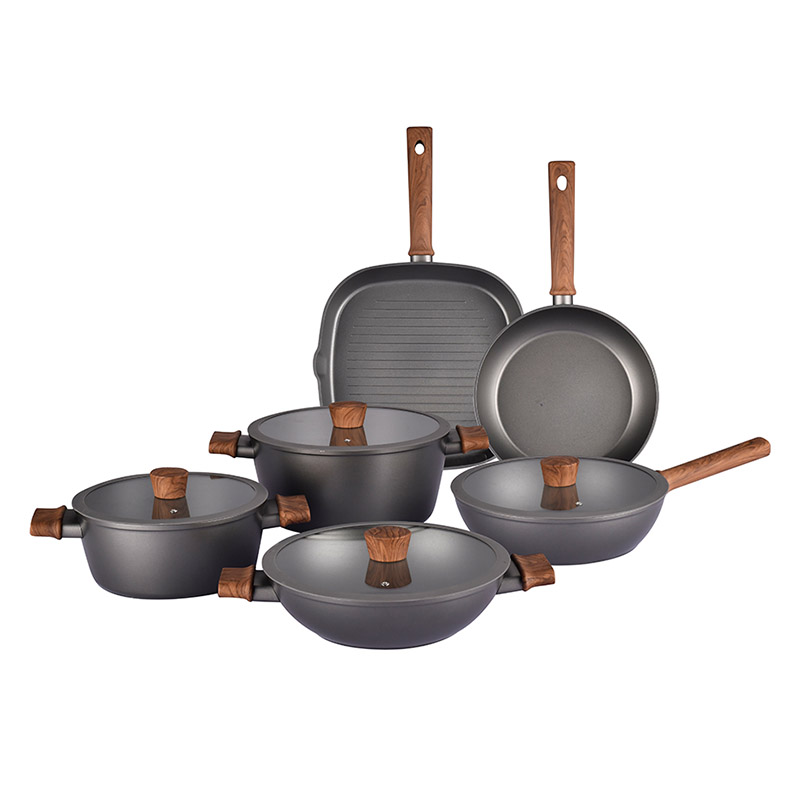
Introduction
For years, "recycled aluminum" in cookware was a marketing footnote — a badge on a box, disconnected from the unit economics. In 2027, that disconnect has closed. Recycled aluminum uses roughly 95% less energy than primary production, embeds a fraction of the carbon, and now carries a hard, calculable value: CBAM certificate costs in the EU, retailer Scope 3 requirements, and consumer willingness to pay for verified green claims.
The result is that a 100% recycled-aluminum sourcing program is no longer a sustainability expense. It is a margin decision with an ROI that can be modeled line by line. This article builds that model — what the savings are, where the premiums sit, and how to structure a green sourcing program that pays for itself.
Section 1: Market Signal
What is changing in the aluminum supply chain.
Secondary supply is scaling.
- Recycled aluminum already accounts for roughly a third of global supply, and post-consumer scrap availability is rising as collection and sorting infrastructure matures across Europe and North America.
Certification is standardized.
- Mass-balance chains of custody, ASI (Aluminium Stewardship Initiative) certification, and SCS Recycled Content verification now allow buyers to prove recycled content rather than claim it.
Regulation prices the difference.
- Under CBAM, verified low-carbon aluminum directly reduces certificate costs; the EU's recycled-content ambitions and circular economy rules point the same direction for packaging and goods.
Retailers are converting preference into requirements.
- EU and US retail groups increasingly set recycled-content and PCF requirements in supplier scorecards, and some segments already quote green-premium pricing at shelf level.
Consumer verification is maturing.
- Third-party labels and digital product passports are replacing self-declared green claims — which changes what buyers must document.
Section 2: Driving Factors
Why the ROI is real in 2027.
Factor 1 — The energy and emissions gap. Producing secondary (recycled) aluminum consumes roughly 5% of the energy of primary production and emits on the order of 0.5–2.5 tCO2e per tonne versus roughly 11–16 for primary. That gap is now a priced input under CBAM and a scored criterion in retailer ESG programs.
Factor 2 — Carbon cost is cash. At an EU ETS-linked price of €70–90 per tonne, a tonne of verified secondary aluminum carries roughly €700–1,200 less carbon cost than a tonne of primary metal — a delta that lands in the CBAM declaration of the importer.
Factor 3 — Scrap economics are favorable. Secondary aluminum is generally produced at lower cost than primary, meaning the green option is frequently the cheaper input before any premium is considered.
Factor 4 — Demand signals from the channel. Retailers facing CSRD reporting and consumers facing green-washing fatigue are both moving toward verified claims. Product with certified recycled content and a credible PCF gets listing priority and, in tested segments, price support at retail.
Section 3: Impact on Buyers
Where the value appears.
CBAM and carbon savings.
- For EU-bound cookware, verified recycled content shrinks the embedded-emissions figure on the declaration — and the certificate bill — with no change to the product itself.
Retailer qualification.
- A certified recycled-content program satisfies the fastest-growing line in supplier scorecards, protecting listings and allocation priority.
Retail price headroom.
- Verified green credentials support 3–8% price premiums at retail in tested markets — the consumer pays for part of your program.
Claim risk management.
- Unverified green claims now carry regulatory and reputational risk (greenwashing enforcement is active on both sides of the Atlantic). Certification converts a risk into an asset.
Process quality.
- Green programs require better material documentation and mass-balance tracking — infrastructure that also improves compliance and audit performance across the business.
Section 4: Manufacturing Perspective
How green manufacturing actually runs.
A factory executing a 100% recycled program, as Zhejiang Tim Household / Changyuan Technology does on dedicated lines, manages the supply chain from scrap sourcing to mass-balance documentation. The operational stack: certified recycled ingot with documented chain of custody, line-level segregation to protect recycled-content claims, energy metering that feeds per-SKU PCFs, and third-party verification of both content and footprint. The ROI in the factory is visible too: lower material cost, lower energy per tonne, and higher line efficiency from tighter process control.
Technical Data
|
Parameter |
Primary Aluminum |
Secondary (Recycled) |
|
Energy vs. primary |
Baseline (100%) |
~5% (≈95% savings) |
|
Embedded emissions |
~11–16 tCO2e / t |
~0.5–2.5 tCO2e / t |
|
Carbon cost at €80/t |
~€880–1,280 / t |
~€40–200 / t |
|
Typical material cost |
Higher (energy-intensive) |
Generally lower (scrap-based) |
|
Certification routes |
EPD, ASI |
ASI, SCS Recycled Content, ISO 14021 (verified) |
|
Cookware-relevant claim |
Low-carbon ingot |
100% recycled content + PCF |
|
Retail price support (verified claims) |
— |
3–8% premium observed in tested segments |
SOP: Structuring a Green Sourcing Program with ROI
Quantify the baseline.
1. Calculate the current embedded emissions and carbon cost of your EU-bound SKUs using declared or default values.
Model the switch.
2. Recompute the same figures for verified secondary aluminum; project CBAM savings per container and per year.
Request certification.
3. Ask suppliers for ASI/SCS Recycled Content verification and a mass-balance chain of custody — a declaration alone is not a claim.
Verify with data.
4. Request per-SKU PCFs and, where relevant, run independent sampling to confirm recycled content.
Price the program.
5. Compare certified-ingot cost, process changes, and certification fees against CBAM savings, retailer scorecard benefits, and retail price headroom.
Contract the claim.
6. Write the recycled-content percentage, certification validity, and document delivery obligations into the supply agreement.
Communicate with evidence.
7. Enable retailers to make verified claims with the certificates and PCFs — protecting them and yourself from greenwashing exposure.
FAQ
Q: Is recycled aluminum lower quality for cookware? A: No. With controlled alloying, recycled aluminum meets the same alloys (3003, 3004) and forming performance as primary metal. Quality is determined by the alloy and process, not the scrap origin.
Q: How much does 100% recycled content cost? A: Often less, because secondary aluminum is cheaper to produce. The real costs are certification, documentation, and line segregation — which are modest and amortize across volume.
Q: How do I prove recycled content to a retailer? A: Third-party certification (ASI, SCS Recycled Content) with a documented chain of custody and a per-SKU PCF. Self-declared claims are increasingly rejected — and risky.
Q: What is the payback period for a green sourcing program? A: In EU-bound programs, CBAM savings alone can offset certification and documentation costs within one to two shipping seasons; retailer scorecard benefits and price support accelerate it.
Q: Does this only matter for the EU? A: No. US retailers are building recycled-content and carbon expectations into scorecards, and greenwashing enforcement makes verified claims valuable everywhere. The EU simply prices it first.
Conclusion
In 2027, the green choice and the economic choice are converging. Recycled aluminum costs less to produce, embeds a fraction of the carbon, and converts that gap into CBAM savings, retailer preference, and verifiable shelf-level value. Importers who build certified recycled-content programs now — with real documentation, not badges — turn ESG sourcing from a compliance line into a measurable ROI line.