


 Español
 عربى
عربى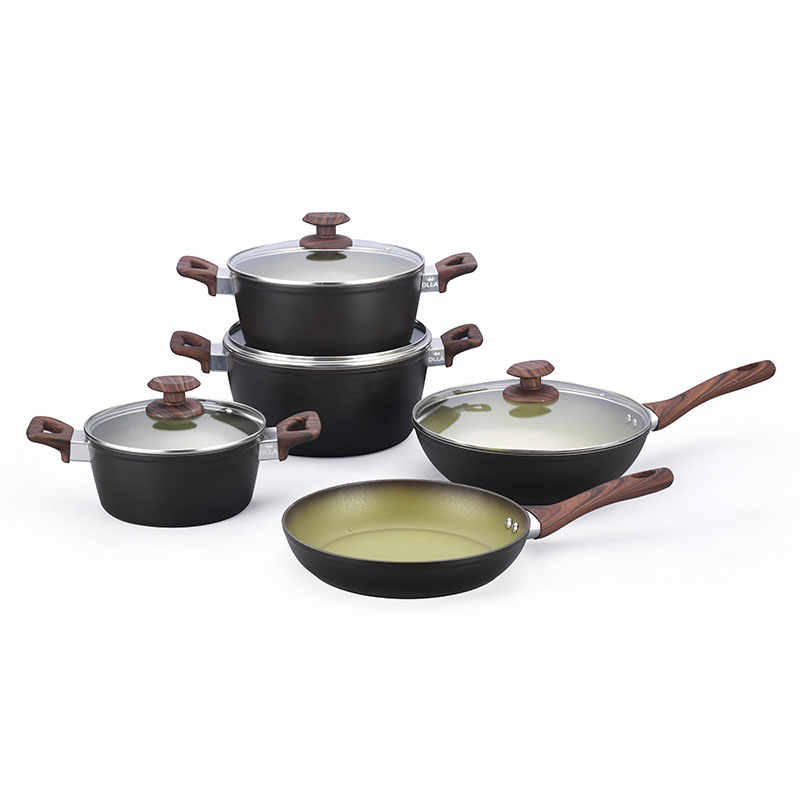
China's aluminum non-stick cookware industry has undergone rapid development over the past two decades, now forming the world's largest manufacturing system. As a major exporter of cookware, China has accumulated mature expertise in aluminum processing, coating technology, and supply chain integration. By 2026, several clear trends have emerged in the industry: the use of eco-friendly water-based coatings continues to rise, the adoption of automated production lines is increasing, and manufacturers are responding more quickly to food contact material regulations in European and American markets.
In terms of regional distribution, the three core production hubs are Zhejiang, Guangdong, and Shandong. For overseas buyers, understanding this industrial landscape helps in identifying non-stick cookware manufacturers with stable delivery capabilities.
Sourcing Guide
When selecting a Chinese non-stick cookware manufacturer, it is recommended to follow these steps:
Step 1: Define Product Positioning
Determine coating type: PTFE-based non-stick, ceramic non-stick, or hard anodized
Determine pot body structure: three-layer clad bottom, single-layer stamped, or forged process
Estimate annual purchase volume to match factory scale
Step 2: Production Area Selection
The advantages of non-stick cookware manufacturers vary significantly by region:
Yongkang, Jinhua, Zhejiang: Complete industrial chain, fast mold development, strong cost control capabilities. Suitable for mid-to-high-end OEM, e-commerce bestsellers, and diverse small-batch orders.
Foshan, Jiangmen, Guangdong: Fine craftsmanship, advanced surface treatment technology, extensive export experience. Suitable for high-end private labels and European/American supermarket channels.
Zibo, Linyi, Shandong: Close to aluminum raw material sources, cost advantages for die-casting. Suitable for large-volume basic models and promotional products.
Step 3: Factory Inspection (On-site or Virtual)
Focus on: cleanliness of the coating spraying line, temperature control records of sintering furnaces, salt spray testing equipment, and fatigue testing equipment. A reputable non-stick cookware manufacturer will typically present its quality control process proactively.
Step 4: Sample Verification
Request samples from the factory using the same process as the target order. Conduct wear resistance tests, adhesion tests, and thermal shock tests. Do not accept “specially made samples” only.
Top Cookware Manufacturers in China 2026
Below are ten representative aluminum non-stick cookware manufacturers in China, all equipped with mature production systems and export capabilities:
Supor
A leading enterprise in China's cookware industry, with production bases in Zhejiang and Hubei, Supor has mature aluminum non-stick cookware product lines and large-scale export capabilities.
Aishida
Headquartered in Wenling, Zhejiang, this A-share listed company offers a product range covering aluminum non-stick cookware and stainless steel cookware, exporting to European, American, and Southeast Asian markets.
Chui Dawang
Located in Yongkang, Zhejiang. Focuses on forged aluminum and stainless steel composite bottom non-stick cookware. Features a well-established foreign trade team with fast response times, supporting small-to-medium batch custom orders.
Jiangmen Jingyu
Located in Jiangmen, Guangdong. Strong expertise in Japanese and European high-standard coating processes, suitable for clients with stringent surface finishing requirements.
Shandong Luda
Located in Shandong. Leverages local aluminum resources to offer cost advantages in high-volume die-cast aluminum non-stick cookware, ideal for large-scale retailer centralized purchasing.
Zhejiang Changyuan
Founded in 2009 in Zhejiang, the company specializes in forged aluminum non-stick cookware and holds independent import and export rights. Products are exported to markets including Europe, the United States, and Southeast Asia.
Guangdong Hongzhi
Based in Zhanjiang, Guangdong. Specializes in aluminum non-stick cookware and electric cookware, with export markets primarily in Europe and North America, and operates a fully equipped testing laboratory.
Yongkang Lisheng Stainless Steel
Located in Yongkang, Zhejiang. Focuses on export-oriented aluminum non-stick cookware, mainly producing frying pans and woks, and accepts small-to-medium batch custom orders.
Ningbo Xitilai
Located in Ningbo, Zhejiang. Focuses on high-end aluminum non-stick cookware manufacturing, sourcing coating materials mainly from European and American suppliers, serving mid-to-high-end overseas brands.
Zhejiang Sanhe Cookware
Located in Ningbo, Zhejiang, with an annual capacity exceeding 30 million units. Specializes in multi-layer composite steel-aluminum non-stick cookware and has extensive experience in North American market compliance, serving as a long-term OEM partner for international first-tier brands.
FAQ
What certifications should an aluminum cookware manufacturer have?
Manufacturers targeting international markets typically need certifications that comply with food contact material regulations in their target markets. Common certifications include FDA for the U.S. market, LFGB for Germany and the broader EU market, RoHS for global hazardous substance control, and SGS test reports for coating safety. Some European buyers also request BPA Free declarations. When sourcing, request scanned copies of these certifications and verify that the certification holder matches the manufacturing factory name.
What is the MOQ for aluminum cookware from China?
MOQ varies depending on the manufacturer's scale and production method. Large manufacturers (SUPOR, ASD) may require 5,000–10,000+ units. Mid-size OEM specialists like Changyuan work with MOQs from 500 units for standard catalog products. It is advisable to clearly state your intended order quantity when requesting a quote to allow the manufacturer to provide an accurate pricing proposal.
Where are the main cookware manufacturing regions in China?
China's cookware manufacturing is mainly located in three regions. Zhejiang is the largest aluminum cookware production base—Yongkang is known as "China's Cookware Capital," and Ningbo specializes in die-casting and export. Guangdong, with Foshan and Jiangmen as key hubs, leads in non-stick coating R&D and high-end manufacturing. Shandong, centered around Linyi and Zibo, has a mature aluminum processing supply chain ideal for high-volume production.
How long does production take for aluminum cookware?
Lead time depends on the order type and factory schedule. For a standard OEM order, the timeline is as follows: mold development takes 15 to 20 days, sample approval takes 7 to 10 days, and mass production takes 30 to 40 days—totaling approximately 50 to 70 days. For regular products with existing molds, lead time can be shortened to 35 to 45 days. It is recommended to specify delivery terms in the contract and follow up on production progress through third-party inspection services or video inspections.
Is aluminum cookware safe?
Yes, aluminum cookware is safe when used correctly. Modern aluminum non-stick cookware has a coating that prevents direct contact between aluminum and food. Compliant manufacturers use coating materials that pass food-grade tests such as FDA or LFGB. To maintain safety and performance, avoid heating the cookware empty for extended periods and do not use metal utensils that may scratch the coating.
Can manufacturers provide OEM or private label cookware products?
The majority of aluminum non-stick cookware manufacturers in China offer both OEM and private label services. Service scopes typically include developing molds based on client design drawings, customizing brand logos on the pan bottom or handles, and customizing packaging boxes and outer cartons. Professional non-stick cookware manufacturers like Zhejiang Changyuan Technology have extensive experience in customizing aluminum cookware, supporting full-process private label projects from sample development to mass production.